
The Political Voice of the Outcast
The Man Who LaughsGwynplaine’s effort to speak for the poor turns his personal history into a political accusation against monarchy and privilege.
increasing Bearing strength in each event
 decreasing
Bearing strength in each eventdecreasingA Child Outside Society
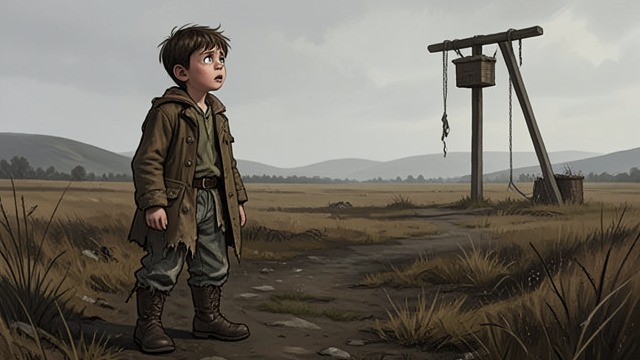
A Child Outside Society
Society encountered as rejection
Gwynplaine is left without food, shelter, or a human guide.
The first people he knows have abandoned him.
His experience gives political language a future personal foundation.
The outcast begins to observe
He sees law through a gibbet and wealth through a dead woman.
The child’s first world joins public power to private suffering.
His later critique grows from this early encounter with exclusion.
A Performer Reads the Crowd
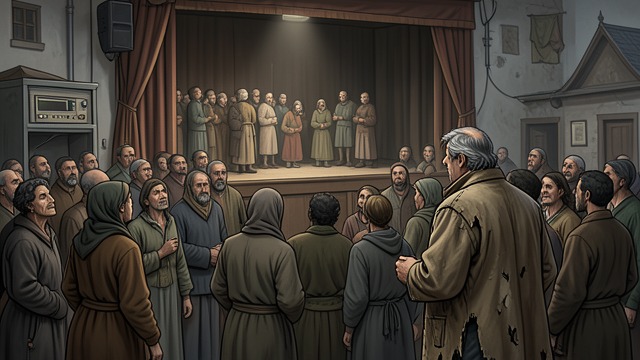
A Performer Reads the Crowd
Misery in the audience
Gwynplaine watches workers, parents, and the poor gather to be entertained.
He sees want and social pressure written in their faces.
The crowd becomes evidence about the world beyond the stage.
A wish to help
His own rescue of Dea encourages him to imagine helping everyone.
Ursus warns him that a poor man’s political speech is dangerous.
The performer’s compassion begins to exceed his private household.
A Title as an Instrument
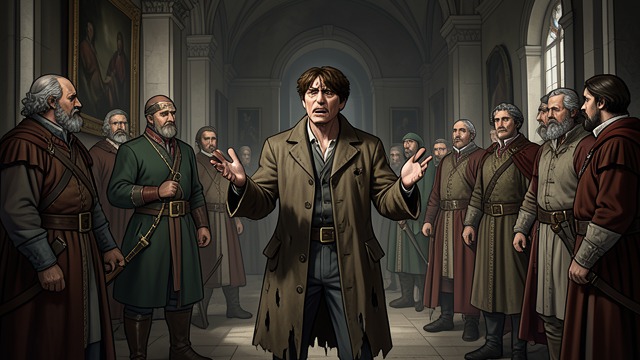
A Title as an Instrument
New power accepted
Gwynplaine briefly imagines using his seat to challenge privilege.
He believes his experiences can give the poor representation.
The hereditary title appears capable of becoming a public tool.
A personal cost
The new position has already separated him from Dea and Ursus.
His ambition and duty pull in opposite directions.
The political opportunity is inseparable from private loss.
The Poor Addressed Upward
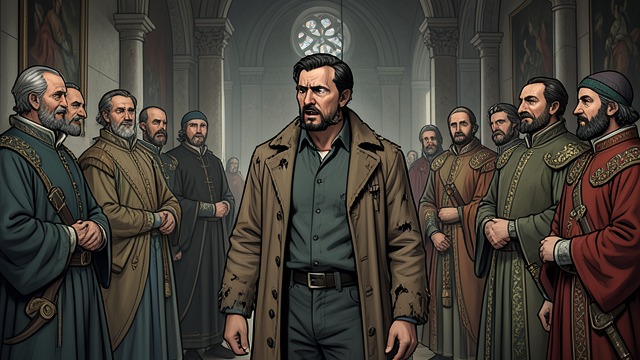
The Poor Addressed Upward
Testimony from below
Gwynplaine describes hunger, worklessness, and punishment to the peers.
He claims to speak for those whom society keeps silent.
His argument joins personal experience to a broad demand for justice.
A failed audience
The lords laugh rather than examine his examples.
His face recasts an indictment as entertainment.
The chamber demonstrates how power can hear sound but refuse meaning.
The Voice Falls Silent
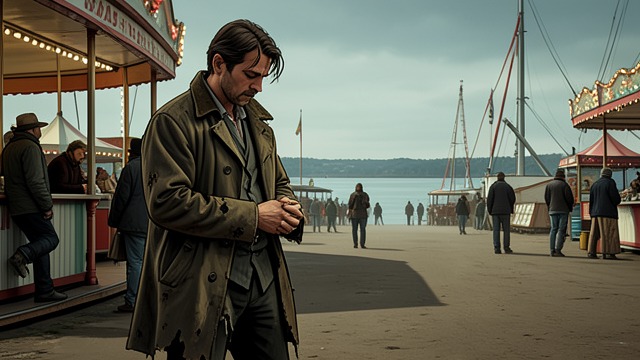
The Voice Falls Silent
A public defeat
Gwynplaine’s speech does not change the chamber’s behaviour.
The House disperses without resolving the misery he described.
His political voice has been heard but not accepted.
The speaker withdraws
He returns to the empty fairground rather than remain among the lords.
Without Dea and Ursus, public purpose loses its human ground.
His final silence precedes his disappearance into the water.
On the Portland coast in January 1690
During the Green Box’s Southwark performances
On the morning after Gwynplaine’s recognition
During the House of Lords sitting in 1705
After Gwynplaine leaves Westminster at night
